
How to Choose a Co-founder Beyond Skills
Why compatibility, pace, emotional regulation, and decision-making styles matter more than resumes.
Equito's Digest
May 18, 2026 · 10 min read
The mistake most founders make when choosing a co-founder
Most founders begin the search with a simple question: "What skill am I missing?"
If they are non-technical, they look for a developer. If they are technical, they look for a business person. If they are product-focused, they look for someone commercial. That logic makes sense. But it is incomplete.
Because a startup is not just a skills gap. It is a high-pressure operating relationship.
You are not simply choosing someone who can code, sell, design, raise money, or manage operations. You are choosing someone who will sit beside you when:
- The product breaks
- Users don't convert
- Money gets tight
- Investors say no
- Priorities change
- Motivation drops
- One of you starts doubting the whole thing
The real question is not only "Can this person do the work?" — it is also "Can we build under pressure together?"

Co-founder failure is rarely a resume problem
A co-founder can look perfect on paper — impressive companies, strong technical ability, a great network, fundraising experience, domain expertise. And still be the wrong person to build with.
Because the hardest parts of co-founder relationships are not visible in a resume. You only discover them through working together:
- How do they handle stress?
- How fast do they move?
- Do they avoid hard conversations?
- Do they make decisions quickly or endlessly analyze?
- Do they become defensive when challenged?
- Do they communicate clearly when blocked?
- Do they need structure or prefer improvisation?
- Do they want the same level of ambition?
This is where many founder relationships break. Not because someone lacked talent. Because the partnership lacked operating compatibility.
The data is uncomfortable
Harvard Business Review has cited Noam Wasserman's research from The Founder's Dilemmas, noting that around 65% of startups fail because of co-founder conflict. HBR describes the co-founder relationship as one of the most intimate relationships in business — yet one that many people do not think carefully about before entering.
Harvard Business Review — How Cofounders Can Prevent Their Relationship from Derailing; Noam Wasserman, The Founder's Dilemmas
That means the co-founder decision is not just a hiring decision. It is a company design decision. The person you choose shapes:
- How fast the company moves
- How conflict gets handled
- How decisions are made
- How accountability works
- How emotionally stable the startup feels
- How resilient the team becomes under pressure
A weak co-founder match does not just create tension. It becomes operational drag.
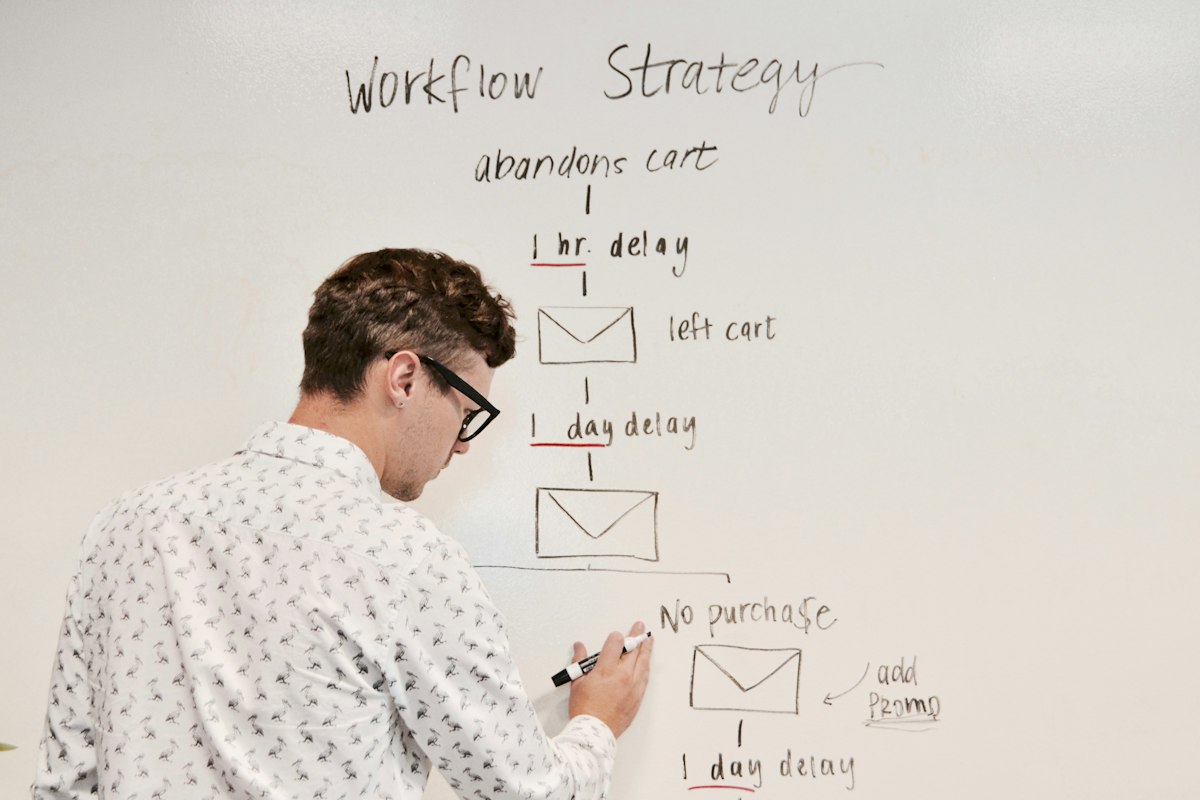
Skills get you started. Compatibility keeps you building.
Skills are visible. Compatibility is behavioral. A founder might say: "I need someone technical." But what they really need is: "I need someone technical who can communicate tradeoffs clearly, handle uncertainty calmly, and move at the pace this company needs."
The skill is the entry point. The working style determines whether the partnership survives.
1. Compatibility matters more than similarity
A common misconception: "We get along really well, so we'll be good co-founders." Maybe. But friendship and co-founder compatibility are not the same thing.
You do not need a co-founder who is exactly like you. In fact, that can create blind spots. You need someone who is different enough to strengthen the company, but compatible enough to operate through tension.
The best co-founder pairs often have complementary strengths:
- One is more product-driven, the other more commercial
- One is more strategic, the other more execution-focused
- One sees risk, the other sees opportunity
- One loves detail, the other pushes speed
The same personality difference can be either an advantage or a liability — depending on trust, communication, and shared operating principles.
Founders should not only ask: "Do we have complementary skills?" They should ask: "Do we interpret each other's differences as value or as threat?" That answer matters enormously.
2. Pace is one of the most underrated co-founder filters
Pace is rarely discussed early enough. But it becomes one of the biggest sources of founder resentment.
One founder wants to ship quickly, test fast, learn through the market, and tolerate imperfect releases. The other wants to refine more, reduce risk, validate carefully, and avoid reputational damage. Neither is automatically wrong. But if founders operate at different speeds without discussing it, the company becomes emotionally tense.
The faster founder may think: "They're not committed enough." The slower founder may think: "They're reckless." That gap becomes personal quickly.

Pace is not about hours worked
Pace is also about decision velocity: how quickly someone responds to uncertainty, makes decisions with incomplete information, moves from discussion to action, and recovers after mistakes. A founder who works long hours but avoids decisions can still slow the company down.
The real question is not: "How much time do you have?" It is: "How do you create movement?"
A useful pace conversation before committing
- How quickly do you expect us to ship?
- What level of imperfection are you comfortable releasing?
- How often should we review progress?
- How long should a decision stay open before someone owns it?
- What does "urgent" mean to you?
These questions may feel uncomfortable. That is the point. The discomfort now prevents resentment later.
3. Emotional regulation is a founder skill
Most founders underestimate emotional regulation because it sounds soft. It is not soft. It is operational. Startups create constant emotional pressure: uncertainty, rejection, ambiguity, financial stress, technical setbacks, investor silence, user criticism.
A co-founder who cannot regulate emotion will eventually shape the company's emotional climate. They may panic during uncertainty, become defensive under feedback, disappear when overwhelmed, or turn disagreement into conflict.
Emotional avoidance is also a problem
Some founders do not explode. They disappear. They avoid uncomfortable conversations, delay feedback, say "all good" when it is not, and let frustration accumulate. This can be just as damaging.
Amy Edmondson's influential research on psychological safety defines it as a shared belief that a team is safe for interpersonal risk-taking. Her 1999 study connected psychological safety with learning behavior in work teams — and found it to be a foundational driver of team performance.
Amy Edmondson — Psychological Safety and Learning Behavior in Work Teams, Administrative Science Quarterly, 1999
For startups, this means founders need to be able to say: "I think we're wrong." "I'm overwhelmed." "I disagree." "I made a mistake." If those sentences feel dangerous, the partnership is fragile. Because startups learn through mistakes — and if founders cannot speak honestly, the company cannot learn fast enough.

4. Decision-making style matters more than people expect
Startups are decision machines. Every week, founders make decisions about product scope, users, pricing, hiring, fundraising, positioning, customer feedback, technical tradeoffs, go-to-market, and priorities.
A co-founder's decision-making style will shape the company as much as their skills. Some founders are intuitive, others analytical. Some fast, others cautious. Some consensus-driven, others domain-ownership-focused. None of these are automatically bad — but incompatible decision styles create constant friction.
The real issue is not disagreement. It is how decisions close. Without a decision system, the startup keeps reopening the same conversations — destroying speed.
Daniel Kahneman's work popularized the idea that human decision-making is shaped by fast intuition and slower, more deliberate reasoning. His broader research with Amos Tversky showed how cognitive biases influence judgment under uncertainty — a condition founders live in constantly.
Daniel Kahneman — Thinking, Fast and Slow, Farrar, Straus and Giroux, 2011
The best co-founder pairs do not simply make good decisions. They understand how they make decisions together.
5. Ambition alignment is non-negotiable
Founders often avoid discussing ambition clearly because it can feel awkward. But it is one of the most important compatibility areas.
One founder may want venture scale, aggressive growth, fundraising, fast hiring, and global expansion. The other may want sustainable revenue, slower growth, profitability, and lifestyle flexibility. Both visions can be valid. But they are not the same company.
If founders disagree on ambition, every strategic decision becomes harder: pricing, hiring, equity, fundraising, product scope, risk tolerance, exit expectations.
Many founder teams stay vague — "Let's just see where it goes." That sounds flexible. But it can hide completely different expectations that will surface by month twelve.
6. Values show up in operational behavior
Values are not posters. Values are revealed by decisions. When the startup is under pressure, does the person prioritize speed or craft? Transparency or image? Revenue or user trust? Growth or sustainability?
These are not abstract preferences. They shape the company. A founder's values become visible when tradeoffs appear. That is why co-founder selection should include real working scenarios, not just conversations.
Do a working trial before committing
The best way to evaluate a potential co-founder is not endless talking. It is working together. Before formalizing the partnership, run a small project:
- Build a landing page together
- Interview users and synthesize findings
- Create an MVP prototype
- Write the pitch deck
- Run a weekly check-in for four weeks
This reveals more than any pitch conversation. You see communication style, reliability, follow-through, judgment, ownership, stress response, feedback behavior, and actual pace.
7. Trust is built through consistency, not enthusiasm
Early conversations are often full of energy. Everyone sounds committed. Everyone says they are excited. But trust is not built through enthusiasm. It is built through repeated consistency.
- Do they do what they said they would do?
- Do they communicate when blocked?
- Do they show up prepared?
- Do they handle feedback maturely?
- Do they make decisions transparently?
- Do they keep momentum when the work becomes boring?
"I chose my first co-founder because they were brilliant. I chose my second because I trusted how they behaved under pressure." That distinction is everything. Brilliance creates possibility. Trust creates endurance.
8. Equity should follow commitment and ownership clarity
Many founders rush into equity splits too early, treating equity as a symbolic gesture of fairness. But equity should reflect level of commitment, scope of ownership, risk taken, time invested, responsibility carried, and long-term expectations.
Equity ambiguity becomes emotional later. If one founder feels they are carrying more responsibility than the split reflects, resentment grows. These conversations are hard. That is why they should happen before the company becomes emotionally and financially complicated.
9. The best co-founders are compatible under stress
This is the real test. Almost anyone can seem like a good co-founder during a promising conversation. The real question is: how do they behave when something fails, users reject the product, money becomes an issue, a deadline slips, or a painful decision is needed?
Pressure reveals partnership quality. A great co-founder is not someone who never creates tension. A great co-founder is someone with whom tension becomes useful instead of destructive.

10. What to look for beyond skills
A strong co-founder match usually includes:
- Compatible ambition — similar level of company ambition and risk appetite
- Compatible pace — a rhythm that feels challenging but sustainable for both
- Emotional maturity — ability to discuss difficult things without defensiveness
- Decision clarity — knowing how decisions get made, owned, and revisited
- Trustworthy execution — reliability without constant monitoring
- Complementary strengths — different capabilities without undermining each other
- Shared operating values — agreement on how the company should feel and function
- Ability to repair tension — capacity to recover after disagreement
Every co-founder relationship will experience tension. The question is whether the partnership can repair.
A practical co-founder evaluation framework
Before committing, evaluate five dimensions:
- 1. Skill fit — Can this person do something the company truly needs?
- 2. Work fit — Can we execute together effectively?
- 3. Pace fit — Do we move with compatible urgency?
- 4. Stress fit — Can we handle pressure without damaging trust?
- 5. Decision fit — Can we make and close decisions together?
Most founders over-index on the first. The strongest teams evaluate all five.
Questions every founder should ask before choosing a co-founder
On ambition
- What kind of company do you actually want to build?
- Are you aiming for venture scale, profitability, acquisition, or independence?
- What level of risk are you comfortable taking?
On pace
- How fast should we ship?
- What does "moving too slowly" mean to you?
- How do you feel about imperfect launches?
On conflict
- How do you usually behave when frustrated?
- What kind of feedback is hard for you to receive?
- How should we handle disagreement?
On decisions
- Which decisions should require both founders?
- Which decisions should belong to one person?
- How do we avoid reopening decisions endlessly?
On commitment
- What can you realistically give this startup for the next six months?
- What would make you leave?
- What expectations do you have around equity and ownership?
On communication
- How often should we check in?
- What should be documented?
- What communication style drains you?
These questions are not bureaucracy. They are founder insurance.
The biggest signal: how they behave during uncertainty
A potential co-founder may impress you with confidence. But what matters more is how they behave when confidence is impossible. Do they ask better questions? Stay honest? Remain calm? Seek evidence? Communicate clearly? Keep moving?
Startups are not built in certainty. So choose someone who operates well without it.
Final thought
Choosing a co-founder beyond skills does not mean skills are unimportant. It means skills are only the surface layer. The deeper question is whether two people can create a durable operating relationship under uncertainty.
The best co-founder is not just the person who fills a capability gap. It is the person whose pace, judgment, emotional maturity, and decision-making style allow the company to keep moving when things become difficult.
Because eventually, every startup becomes difficult. And when that happens, resumes matter less than rhythm.
Skills help you start. Compatibility helps you survive.
Sources & Further Reading
- Harvard Business Review — How Cofounders Can Prevent Their Relationship from Derailing · hbr.org
- Harvard Business Review — The Founder's Dilemma · hbr.org
- Harvard Business School — The Founder's Dilemmas · hbs.edu
- Amy Edmondson — Psychological Safety and Learning Behavior in Work Teams · sagepub.com
- Harvard Business School — Psychological Safety and Learning Behavior in Work Teams (citation) · hbs.edu
- Daniel Kahneman — Thinking, Fast and Slow · goodreads.com
- AP News — Daniel Kahneman, Nobel-winning psychologist and economist, dies at 90 · apnews.com
- First Round Review — How to Fix the Co-Founder Fights You're Sick of Having · review.firstround.com
- Business Insider — Anthropic's Daniela Amodei Shares Her Cofounder Test · businessinsider.com
Discussion
No comments yet — be the first to share your thoughts.
Get new articles in your inbox.
Practical insights on co-founder dynamics, startup execution, and founder psychology — delivered when we publish something worth reading.
No spam. Unsubscribe anytime.
Founder Journal
Continue Reading

How Successful Co-founders Divide Responsibilities (Without the Politics)
The best co-founder pairs don't split equity and hope for the best. They build intentional ownership structures — and revisit them constantly.

How Founders Should Structure Weekly Check-ins
A 45-minute weekly ritual that keeps co-founders aligned, unblocked, and building with momentum — without the meeting overhead.

Why Startup Execution Breaks Without Alignment
Most early-stage teams confuse activity with progress. Here's how co-founders stay in sync on what actually matters.