
Founders Often Build Features to Reduce Anxiety — Not Solve Problems
Many features are not built because users need them. They are built because founders need relief — from uncertainty, silence, rejection, and the fear that the core product is not enough.
Equito's Digest
July 9, 2026 · 28 min read
Not every new feature is a product decision.
Sometimes it is an emotional decision disguised as a product decision.
A founder looks at the product and feels uneasy. Growth is slower than expected. Users are not converting. A demo did not land. An investor asked a difficult question. A competitor launched something similar. The waitlist is not moving. The first users are quiet. The roadmap feels thin.
So the founder adds something. A new dashboard. A new filter. A new onboarding step. A new AI assistant. A new profile field. A new analytics page. A new pricing option. A new collaboration tool. A new export button. A new feature that makes the product feel more complete, more serious, more defensible, more investor-ready, more "real."
Many features are not built because users need them. They are built because founders need relief — from uncertainty, from silence, from rejection, from the fear that the core product is not enough.
Overbuilding is often treated as a product problem. But underneath, it is frequently a psychological problem. The founder is not always asking: "What problem does this solve?" Sometimes the founder is silently asking: "What can I build so I feel less afraid?"
That distinction matters. Because features built from anxiety rarely create clarity. They usually create complexity.
Building feels safer than learning.

Learning is emotionally risky. It exposes founders to reality. It can reveal that users do not care. That the market is smaller than expected. That the problem is not urgent. That the positioning is weak. That the product is confusing. That the business model does not work. That the person you imagined as your customer is not actually your customer.
Building feels different. Building feels controlled. You can open the product board. Create tickets. Design screens. Push updates. Mark tasks as done. Announce progress. Show new functionality. Feel momentum.
That is why building can become an emotional refuge. It gives founders something to do when the harder thing is to listen.
But a startup does not become less risky just because the product becomes bigger. A larger product can still be wrong. A more complete product can still miss the problem. A richer feature set can still fail to create demand.
The question is not: "Are we building?" The question is: "Are we becoming more correct?"
Overbuilding often begins with a reasonable fear.
Founders do not overbuild because they are foolish. They overbuild because early-stage startups are full of uncertainty. And uncertainty is uncomfortable.
Psychologists describe intolerance of uncertainty as the difficulty of enduring unknown outcomes. It is associated with worry, distress, and avoidance behaviors when people face ambiguity — a pattern that maps surprisingly well to startup life.
Flores et al. — Intolerance of Uncertainty as a Vulnerability Factor for Excessive Avoidance Behavior (PubMed)
A founder does not know: whether users will come back, whether anyone will pay, whether the product is differentiated enough, whether the category is too crowded, whether investors will understand the story, whether the current version looks credible, whether the team is moving fast enough, whether the idea is actually worth years of effort.
In that environment, building can feel like a way to reduce uncertainty. But it often reduces emotional uncertainty, not market uncertainty. That is the trap. The founder feels better. The product looks bigger. The roadmap looks busier. The pitch looks more complete. But the core question remains unanswered: do users care enough?
Feature creep is not only a scope problem.
Feature creep is usually described as the gradual expansion of product scope. A product starts simple. Then more features are added. Then more edge cases. Then more settings. Then more workflows. Then more roles. Then more dashboards. Eventually, the product becomes harder to understand, harder to explain, harder to sell, and harder to use.
That description is correct, but incomplete. Feature creep is not only what happens to the product. It is also what happens inside the founder. The feature becomes a psychological patch. It covers insecurity. It creates motion. It delays the moment when the founder has to ask whether the core value proposition is working.
The product becomes heavier because the founder is trying to feel lighter.
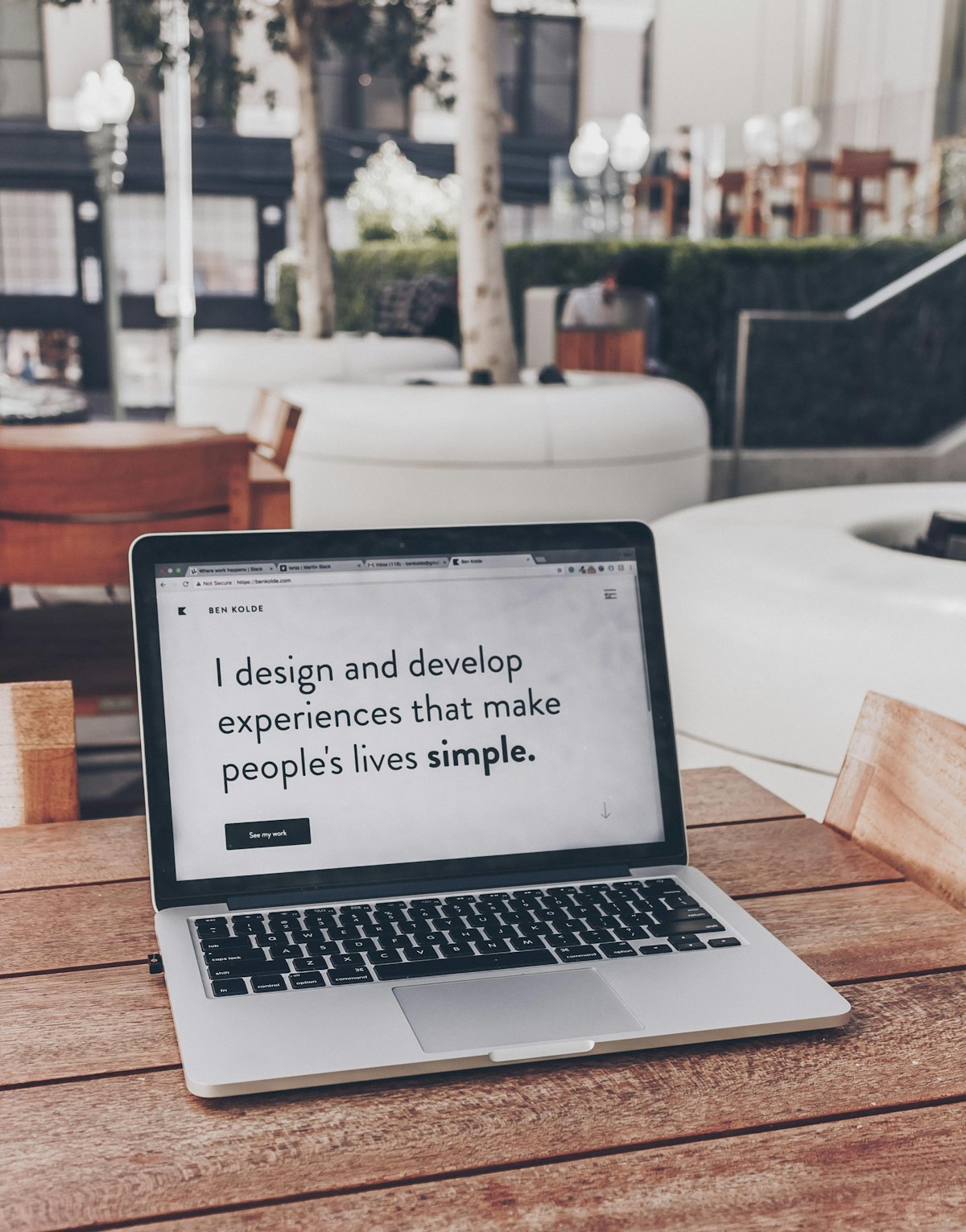
The strongest products are often built by subtraction.
Founders tend to associate progress with addition. More pages. More workflows. More integrations. More automations. More options. More use cases. More customer segments. But great product strategy often works in the opposite direction.
It asks:
- What can we remove?
- What can we simplify?
- What should users not have to think about?
- What is the one moment of value?
- What is the smallest path to that value?
- What feature only exists because we are afraid?
- What are we building that no user has pulled from us?
This is hard because subtraction can feel like loss. But users rarely experience products the way founders experience roadmaps. Founders see effort. Users see friction. Founders see optionality. Users see decisions. Founders see power. Users see complexity.
A product can become more valuable by becoming smaller, if the smaller version helps users reach the core outcome faster.
More features can make a product easier to sell — and harder to use.
Research on feature fatigue found that consumers often value product capability before use, but after use, usability becomes much more important. People may choose feature-rich products before experiencing them, then become frustrated when those same features make the product harder to use.
Thompson, Hamilton, Rust — Feature Fatigue: When Product Capabilities Become Too Much of a Good Thing (Journal of Marketing Research)
That matters deeply for startups. Because founders often design for the pitch, the demo, or the landing page. They ask: "Will this make the product look stronger?" But users live inside the product. They ask: "Can I get my job done?"
A feature that helps the product look impressive from the outside can hurt the experience from the inside. That is how overbuilding creates a product that sells promise but weakens usage.
The anxiety feature usually has a pattern.
Features built from anxiety often share certain traits. They are usually:
- Requested by no specific user
- Tied to a vague future use case
- Justified with "someone might need this"
- Added before the core workflow is proven
- Hard to remove later
- Useful in a demo but rarely used in practice
- Built before the team has evidence
- Added because a competitor has something similar
- Designed to answer objections instead of create value
- More about confidence than customer behavior
The language around them often sounds like: "It would be nice to have." "This will make us look more complete." "We'll need it eventually." "Investors will expect this." "Competitors already have it." "It only takes a few days."
Each sentence may sound reasonable. But product bloat is built from reasonable sentences. Rarely does a founder say: "Let's make the product confusing." They say: "Let's just add this one thing." And then they say it again.

The real cost of overbuilding is not just development time.
The obvious cost of overbuilding is time. But the deeper costs are less visible.
1. Cognitive load
Every additional feature asks the user to understand more. Even if they never use it, its presence can make the product feel heavier.
2. Maintenance
Every feature becomes something the team must support, test, explain, document, debug, and update.
3. Positioning confusion
The more a product can do, the harder it can become to explain what it is actually for.
4. Onboarding friction
A product with too many possible paths makes it harder to guide new users toward the first meaningful outcome.
5. Team distraction
Every new feature creates more internal surface area and more prioritization debates.
6. False confidence
The team feels productive because the product is growing, even if the market signal is not improving.
7. Delayed learning
The biggest danger: overbuilding delays the moment of truth. Instead of testing the core assumption, the team keeps improving the container around it.
Users do not want more product. They want less distance from the outcome.
Founders often think users want the product to do more. But most users want the product to make them do less. Less thinking. Less setup. Less switching. Less explaining. Less uncertainty. Less repeated work. Less time between intention and outcome.
A founder sees a feature and thinks: "This gives the user more control." The user may experience it as: "Now I have another decision to make."
A founder sees a dashboard and thinks: "This gives users more information." The user may experience it as: "What am I supposed to do next?"
The question is not whether the feature is useful in theory. The question is whether it reduces the user's distance from the outcome they came for.
The competitor trap.
One of the fastest ways to overbuild is to watch competitors too closely. A competitor launches a feature. The founder feels pressure. The team asks: "Should we have that too?"
But competitor-driven features are often anxiety features. They are built not because customers demanded them, but because the founder fears looking incomplete. Competitors may be wrong too. They may be overbuilding. They may be serving a different segment. They may be adding features because they are anxious as well.
John Gourville's research on new-product adoption found that customers often overvalue the benefits of what they already have and undervalue the benefits of switching — which means adding more features to compete can make a product harder to sell, not easier.
Gourville — Eager Sellers and Stony Buyers: Understanding the Psychology of New-Product Adoption (HBR)
A startup does not win by becoming a smaller version of a bigger competitor. It wins by being sharper. Sharper about the customer. Sharper about the problem. Sharper about the moment of value. Sharper about what it refuses to build.
Investor anxiety can also create bad features.
Founders often add features because they imagine what investors will expect. They think: "We need analytics. We need AI. We need a marketplace. We need enterprise permissions. We need to show this can scale."
But investors do not invest because a product has more tabs. They invest because the company has insight, traction, urgency, defensibility, and a credible path to growth. A founder can spend months building features that make the product look more mature but do not improve the investment case.
In many early-stage conversations, the stronger answer is not "We built more." It is "We learned what matters."
A focused product with strong evidence is usually more compelling than a broad product with weak signal.
Overbuilding can be a way to avoid selling.
Selling is uncomfortable. It requires hearing objections. It forces founders to explain the product simply. It exposes whether the problem is urgent. It creates rejection. Building is emotionally safer.
So instead of talking to twenty users, the founder builds a feature that might make the next conversation easier. Then another. Then another. Eventually, the product becomes a substitute for sales. The founder thinks: "Once this is ready, outreach will be easier." But the product is never ready enough to remove the discomfort of selling. A feature cannot protect the founder from that. It can only postpone it.
Overbuilding can be a way to avoid choosing.
Strategy requires exclusion. To serve one customer well, the startup must often delay serving another. To make one workflow excellent, the team must avoid building ten adjacent workflows. This is emotionally difficult because focus feels risky. A broad product lets founders imagine many possible futures. A focused product forces a bet.
Overbuilding often happens when founders are not ready to make that bet. They add features to keep options open. But too many options can prevent the company from becoming known for anything. A product that tries to reduce strategic anxiety by serving everyone may end up serving no one intensely enough.

Overbuilding can hide weak positioning.
If a founder cannot explain the product clearly, adding features can feel like a solution. Maybe the user will understand once they see the dashboard. Maybe the value will become obvious if the product has more examples.
But unclear positioning is rarely fixed by more product. Often, it is made worse. A simple product with unclear positioning may still be recoverable. A complex product with unclear positioning becomes harder to diagnose. Is the problem the product? The message? The segment? The onboarding? The pricing?
Complexity does not only confuse users. It confuses founders.
The "just one more feature" loop.
The anxiety behind overbuilding often creates a loop:
- The founder feels uncertain
- The founder identifies a missing feature
- The team builds it
- The product feels more complete
- The anxiety temporarily decreases
- The market still does not respond clearly
- The anxiety returns
- The founder identifies another missing feature
This loop can continue for months. Each feature feels like progress. But the startup is not necessarily moving closer to product-market fit. It is moving closer to a more complex version of the same uncertainty. Building provides temporary emotional relief. Temporary relief can become addictive. And like many forms of avoidance, it works just well enough to repeat.
The hardest question: what are we afraid to test?
A useful way to detect anxiety-driven features is to ask: "What are we avoiding by building this?" Maybe the team is avoiding sales. Maybe it is avoiding pricing. Maybe it is avoiding retention data. Maybe it is avoiding user interviews. Maybe it is avoiding the possibility that the idea is not strong enough.
Before building the next feature, founders should ask:
- What user evidence supports this?
- Which problem does it solve?
- Who specifically asked for it?
- What behavior will change because of it?
- What happens if we do not build it?
- Is this feature reducing user friction or founder anxiety?
- Are we building this because it is necessary, or because we feel exposed without it?

Product strategy is emotional discipline.
Founders often think product strategy is about frameworks. Roadmaps. Prioritization matrices. MVPs. OKRs. User stories. RICE scores. Jobs to be Done. All useful. But none of them work without emotional discipline.
Because the hardest part of product strategy is not knowing that focus matters. Most founders know that. The hardest part is tolerating the discomfort of focus. It is saying no when a feature sounds impressive. It is resisting the competitor comparison. It is launching before the product feels complete. It is listening to silence without panicking. It is watching weak activation data and investigating instead of adding.
Product strategy is not only a thinking system. It is a nervous system. The team must be able to stay calm enough to choose clearly.
What evidence should justify a new feature?
Not every new feature is bad. Startups need to build. Products evolve. Users discover new needs. Markets shift. The danger is not adding features — the danger is adding features without evidence.
A feature becomes more justified when there is evidence such as:
- Repeated user requests from the target segment
- Observed friction in the core workflow
- Failed activation caused by a missing capability
- Retention loss tied to a specific limitation
- Paid customer demand
- Strong usage of a manual workaround
- Strategic necessity for a chosen market
- Clear connection to the product's main outcome
A feature becomes weaker when the justification sounds like: "People might want it." "Competitors have it." "It will look good in demos." "It won't take long." "It makes the product feel bigger."
Pendo's 2019 Feature Adoption Report found that on average, 80% of features are rarely or never used. This means most feature investment does not translate into usage — it translates into product surface area that accumulates without return.
Pendo — The 2019 Feature Adoption Report
The user request trap.
Even user requests can become anxiety triggers. A user asks for a feature. The founder feels validated. So the team builds it. But not every request should become roadmap. Users often ask for solutions based on their current habits. Founders should listen carefully, but not obey automatically.
The deeper question is: "What problem is behind this request?"
- If three users ask for custom notifications, the problem may not be notifications — it may be that users do not know what requires attention.
- If users ask for exports, the problem may not be export functionality — it may be trust, reporting, or internal approval.
- If users ask for more dashboard metrics, the problem may not be analytics — it may be uncertainty about progress.

Overbuilding damages the founder team too.
Overbuilding does not only affect users. It affects co-founder dynamics. A product-heavy founder may keep adding because building is where they feel in control. A commercial founder may push for more features because they want easier sales conversations. A design founder may add polish because they fear judgment. A technical founder may add architecture because they fear future scale issues.
Each person may be acting from a different anxiety. If the team does not name this, roadmap debates become emotional without being honest. The argument appears to be about features. But underneath, it may be about fear. Fear of looking weak. Fear of wasting time. Fear of losing users. Fear of being wrong.
The roadmap should not become a place where unspoken anxiety accumulates.
The anti-anxiety roadmap.
A healthier roadmap does not ask: "What can we add?" It asks: "What do we need to learn, prove, simplify, or strengthen?" That creates a different kind of roadmap. Instead of feature categories, it may include:
Assumptions to test
What must be true for this product to work?
Frictions to remove
Where do users fail, hesitate, or abandon?
Signals to strengthen
What behavior indicates real value?
Workflows to simplify
Where is the product making users think too much?
Features to delete
What exists but does not help the core outcome?
Bets to delay
What sounds useful but lacks evidence?
This type of roadmap does not remove building. It makes building accountable to learning.
A simple test before building any feature.
Before committing to a new feature, founders can use a simple five-question test.
1. What user problem does this solve?
If the answer is vague, pause.
2. Which users have shown this problem?
If the answer is "future users," pause.
3. What is the smallest way to test it?
Could you test it manually? With a prototype? With a concierge workflow? With a support process?
4. What will we remove or delay if we build this?
Every yes creates a no somewhere else. If the team cannot name the tradeoff, the feature is probably being treated as free. No feature is free. Even if it takes one afternoon to build, it becomes part of the product's mental surface area.
5. Is this feature reducing user friction or founder anxiety?
That last question is often the most revealing.

The product should become sharper after every build cycle.
A startup should not only ask: "What did we ship?" It should ask: "What became clearer?"
After a build cycle, the team should know something it did not know before. For example:
- Users do not need this much onboarding
- One segment activates faster than another
- The dashboard is less important than the first action
- Messaging matters more than filtering
- The core workflow needs fewer steps
- The pricing objection is not price, but confidence
- The feature request was actually a trust problem
If the product grows but the team does not learn, the company is accumulating complexity instead of insight. Insight compounds. Complexity also compounds. Founders must choose which one they are building.
Why subtraction feels so hard.
Removing features can feel emotionally painful. Because a feature carries memory. Someone built it. Someone designed it. Someone argued for it. Someone imagined users loving it. To remove it can feel like admitting waste.
But keeping an unnecessary feature is often more expensive than admitting the mistake. The real waste is not that the team built something that did not matter — that happens. The real waste is forcing future users and future teammates to carry it forever.
The Nielsen Norman Group consistently finds that simpler products with fewer, better-integrated features score higher on usability tests than feature-rich equivalents — even when users initially prefer the feature-rich option before trying both.
Nielsen Norman Group — Simplicity Wins over Abundance of Choice
A feature that does not create value becomes product debt. Not technical debt. Product debt. It makes the product harder to explain, harder to improve, and harder to love.
The best founders are not less anxious. They are better at not obeying anxiety.

Startup anxiety is normal. Founders are building under uncertainty. They are making decisions with incomplete information. They are exposed to rejection, competition, financial pressure, and public judgment. The goal is not to eliminate anxiety. That is unrealistic.
Good founders still feel fear. They just do not automatically convert fear into features. They slow down. They ask what evidence exists. They talk to users. They define the riskiest assumption. They test before building. They cut scope. They protect the core workflow. They allow the product to be simple long enough to learn whether simplicity works.
That is discipline. Not lack of ambition.
What this means for early-stage founders.
If you are building an early-stage product, you should expect the urge to overbuild. It will appear before launch. It will appear after weak feedback. It will appear before investor conversations. It will appear when competitors announce something. It will appear when users are quiet. It will appear when your product feels too small.
In those moments, do not ask only: "What should we add?" Ask: "Why do we want to add something right now?"
The answer may reveal a real customer need. Or it may reveal founder anxiety. Both are useful. But they require different responses. A customer need may require product work. Founder anxiety may require validation, sales, positioning, focus, or a difficult conversation. Building is not always the wrong answer. But it should not be the automatic answer.
What this means for co-founder teams using Equito.
A strong co-founder relationship can protect a product from anxiety-driven overbuilding. Not because co-founders always agree. But because they can challenge the emotional logic behind the roadmap.
One founder can ask: "Who asked for this?" Another can ask: "What happens if we do not build it?" One can ask: "Are we solving a user problem or trying to look more complete?" Another can ask: "What are we afraid to test?"
This is why early collaboration systems matter. A startup does not only need tasks and deadlines. It needs a way to keep decisions honest. A good founder workspace should help teams track assumptions, user feedback, feature requests, roadmap decisions, validation evidence, unresolved risks, and why a feature was accepted or rejected. That history matters. Because when pressure rises, teams forget why they chose focus. A strong system helps them remember.
A practical anti-overbuilding checklist.
User evidence
- Who specifically needs this?
- Have we observed the problem directly?
- How many times has it appeared?
- Is it coming from our target segment?
Problem clarity
- What problem sits underneath the request?
- Is this a symptom or a root issue?
- Can we solve it without a new feature?
Product impact
- Will this reduce friction or add complexity?
- Will it strengthen the core workflow?
- Will new users understand the product faster or slower because of it?
Emotional honesty
- Are we building this because users need it?
- Or because we feel anxious without it?
- Would we still build this if no investor, competitor, or peer ever saw it?
Tradeoff
- What are we not building because of this?
- What will become harder to maintain?
- What future complexity are we accepting?
The founder's real job is not to build more. It is to find the truth faster.
A startup is not rewarded for the number of features it ships. It is rewarded for discovering a valuable problem, solving it clearly, reaching the right users, and building a business around that value. Features are only useful when they serve that process. They are not proof of progress by themselves.
The product can grow while the company stays confused. The roadmap can fill while the market stays indifferent. The team can ship while the core assumption remains untested.
Building is not the same as learning. Complexity is not the same as value. Completeness is not the same as clarity. More product is not the same as more progress.
The strongest founders do not ask, "What else can we build?" They ask, "What must become true next?"
Final thought.
Founders often build features to reduce anxiety because building feels concrete in a world that is mostly uncertain. It gives the team movement. It gives the product weight. It gives the founder relief. But relief is not validation.
A new feature can make a founder feel safer while making the product harder for users to understand. That is the psychology behind overbuilding. The founder is trying to protect the idea from rejection. But the only way to protect a startup is to expose it to reality early enough to learn.
Sometimes the bravest product decision is not adding the next feature. It is stopping. Listening. Testing. Removing. Clarifying. And letting the product stay small enough for the truth to show.
Sources & Further Reading
- Debora Viana Thompson, Rebecca W. Hamilton, Roland T. Rust — Feature Fatigue: When Product Capabilities Become Too Much of a Good Thing · journals.sagepub.com
- Robert T. Rust, Debora Viana Thompson, Rebecca W. Hamilton — Defeating Feature Fatigue · pubmed.ncbi.nlm.nih.gov
- University of Maryland Robert H. Smith School of Business — Feature Fatigue Research · rhsmith.umd.edu
- Nielsen Norman Group — Simplicity Wins over Abundance of Choice · nngroup.com
- Pendo — The 2019 Feature Adoption Report · pendo.io
- CB Insights — Why Startups Fail: Top 9 Reasons · cbinsights.com
- Startup Genome — Why Startups Fail: Premature Scaling · startupcompass-public
- Steve Blank — No Business Plan Survives First Contact With A Customer · steveblank.com
- Alison Flores et al. — Intolerance of Uncertainty as a Vulnerability Factor for Excessive Avoidance Behavior · pubmed.ncbi.nlm.nih.gov
- John T. Gourville — Eager Sellers and Stony Buyers · hbr.org
- Carmine Giardino, Xiaofeng Wang, Pekka Abrahamsson — Why Early-Stage Software Startups Fail · arxiv.org
- Silicon Valley Product Group — Product Fail · svpg.com
- Silicon Valley Product Group — Discovery: Problem vs. Solution · svpg.com
Discussion
No comments yet — be the first to share your thoughts.
Get new articles in your inbox.
Practical insights on co-founder dynamics, startup execution, and founder psychology — delivered when we publish something worth reading.
No spam. Unsubscribe anytime.
Founder Journal
Continue Reading
The Real Purpose of an MVP
Most founders misunderstand the MVP. It is not an excuse to launch something incomplete — it is a validation system.

The Hidden Reason Startups Fail After Finding a Co-founder
It's not the idea. It's not the market. It's the unspoken misalignment that builds silently for months before it breaks everything.

The Startup Operating System for Early-Stage Teams
Two founders. One product. Zero process. This is how teams build the rhythms that keep momentum alive when everything else is uncertain.